
1) Fife is Lone Voice of Concern on OPOA Contract
The new OPOA contract will have wide-ranging effects for the City as a whole, could make a civilian union strike more likely, may create higher pension costs. With all this, negotiators neglected cost-saving overtime brakes recommended by the City Auditor. Despite this, CMs fell over each other to pass it as quickly as possible with minimum discussion, with the exception of pointed questions and follow ups by CM Fife. Read Oakland Observer's coverage of the meeting here.
2) "Exemplary" Police Commissioner Omar Farmer Overlooked in Third Appointment Process, CM Fife Chastises Council for Politicizing Appointments
Despite being overlooked in what has become a barnacled process to appoint Oakland Police Commissioners, current Commissioner Omar Farmer was still a subject of discussion during Tuesday’s deliberation on appointing a new police regular commissioner and alternate. Tuesday's decision marked the third time the same positions came before the Council since late 2025, as the Council's politicization of the candidates has become an expected part of the appointment process. During deliberations, an exasperated Carroll Fife called into question the process that had excluded Farmer, who she called an “exemplary” candidate.
As Farmer’s role as an alternate wound down, he applied for a full seat on the body in 2025, and he along with then Chair, Ricardo Garcia Acosta, were forwarded by the Selection Panel to the Council for appointment. Farmer had served on several boards before the Commission with distinction, and public officials from Nate Miley to Nikki Bas, recommended his reappointment.
According to the East Bay Times, the OPOA opposed Farmer’s appointment, and put pressure on CMs in a visibly politicized process. Though there’s no evidence that the Council's actions were a response to OPOA pressure, no CM was able to provide a reason for opposing the appointees themselves, limiting their criticism to a process that had produced few applicants [and had for years]. The beleaguered process meant that no Commissioner was appointed to those roles late last year. That required both Farmer and Garcia Acosta to serve as hold-overs to keep the body intact and meeting while the Selection Panel again convened to fill those roles—a Commission-saving act they both volunteered to undertake. Both applied for the roles again in the current process.
In the meantime, Council President Kevin Jenkins, who originally politicized the appointment process* continued putting his thumb on the balance scale. Jenkins dismissed the then-chair of the Selection Panel body before her tenure ended after she publicly criticized his efforts to forestall the appointments. The body’s liaison to the City Administrator’s Office was also switched out.
Ostensibly More Robust Outreach Regardless Produces Politically Active and Connected Candidates
Council members had used as their rationale for voting down the original slate their contention that there was inadequate outreach about the appointments—but the candidates who reached the final stages of the current process, significantly, were almost all individuals who are already involved in public safety matters and city government. They included a current ALCO BOS staffer, former Mayor Jean Quan, and an attorney who turned down an appointment because he became a judge.
Doug Wong, who stepped down as a Mayoral appointee after an awkward Rules committee exchange where he was unable to answer simple questions about the role of the Police Commission, applied again through the Selection Panel. As a testament to how politicized the process has become, Wong appeared several times in final round candidate lists, while Farmer appeared in none.
In a further sign of the worries about the destabilization of the process, the Selection Panel has taken new strategies to ensure they have back up plans and contingencies for the Council’s votes. The Selection Panel voted for four new Commissioners, but given the likely possibility that the Council would again vote down a Commissioner, negating the entire slate, bifurcated the appointments into two separate slates. CM Houston has made it clear in an interview with the East Bay Times, he will vote against Jean Quan, who will be presented to the City in an upcoming slate, for example.
No council member had negative comments about the current slate, but CM Carroll Fife expressed grave concerns about the way the process worked against Farmer.
“I just wanted to let the public know that I believe this entire process for the selection panel was extremely problematic and extremely politicized, and even [Selection Panel Chair] Alex [Clewis], I know you initially interviewed Omar Farmer and saw that he had an exemplary resume and background resources. So I'm perplexed…that tells me that something else was happening, and I'm deeply disappointed with this process. If it's about questions, we should be able to question not only the police department and the police commission, but every single director...in this city to ensure we're getting the very best of what the city has to offer. I don't believe this process yielded that, and for that reason, I will not be voting to support the motion on the floor.” Fife said. Fife registered the sole no vote on the slate.
3) Residents Against Data Centers Flood Open Forum at Meeting to Support Fife Moratorium
Residents concerned about the potential for data centers in the city of Oakland came out in large numbers for Tuesday's meeting, as well, seeking to speak out during an open forum session at the end of the meeting.
According to the clerk, about 80 residents spoke during Open Forum, turning what would have been a 2 and a half hour meeting into a 3 and a half hour one. Most of the residents said they supported CM Carroll Fife’s efforts to bring forward a 45- day moratorium on the creation of data center projects in Oakland.
News that appears to have ignited the organizing against data centers came first from The Behring Company, the developers of 415 20th St and a “campus” of sites around it they purchased several years ago. In August, Behring claimed that the new facility on 20th would use the pre-existing facility at the site run by Lawrence Livermore Labs.
So far, it’s unclear when or how Behring would go forward with its ostensible plan, or if it will require Planning Commission or another body’s approval. Behring has claimed it will quintuple the energy usage of the site’s previous tenant, from 4 million watts to 20 million. But although this would likely require a permitting process that would be visibly public in the Planning and Building Department’s “Accella” database, Behring appears to have made no moves toward applying for any permits either before or since making its announcement at that address. A search for Behring and the property on Planning and Building’s “Accella” database reveal nothing for the company, and only the scrapped plans that once envisioned demolishing the structure to build a 39-story office building.
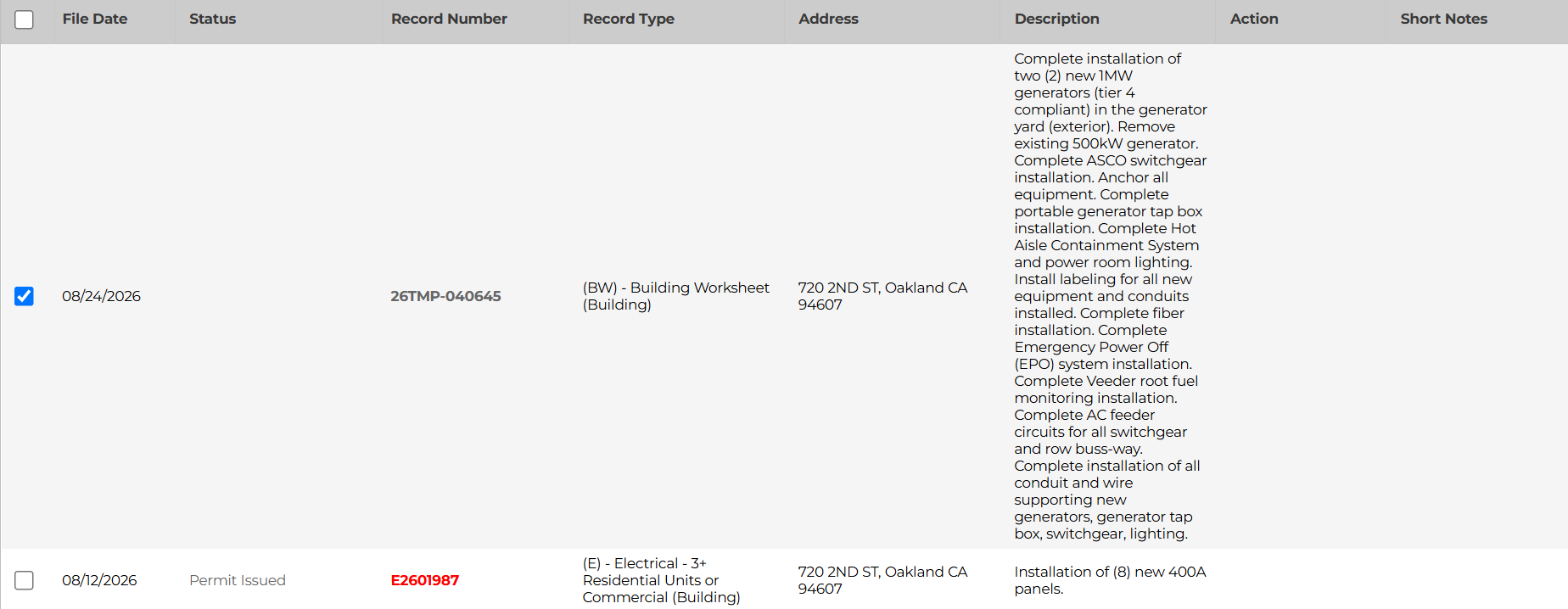
A small data center serving various providers, Digital Reality, has already been operating for nearly a decade in the Jack London Square area of Oakland. A permit application filed in the Accella database dated August 24, 2026 does show that Digital Reality is seeking to expand its capacity from what would now be considered a micro data center with 500KW power to potentially 2 million watts via two 1 million watt diesel generators—what would still be considered a “small” data center.
Fife’s moratorium will be heard at the Life Enrichment Committee meeting Tuesday at 4:30pm and various organizations are mobilizing around supporting the moratorium, with some urging a complete ban as well.
*by abrogating the charter and removing the appointments from scheduling calendar in mid-2025 as chronicled by the Oakland Observer's live reporting at the time
Comments ()