
1) City Reaches Tentative Agreement with SEIU 1021 and IFPTE 10 Days After Pre-Strike Rally
The City of Oakland reached tentative 3 year agreements this week with its largest civilian unions, first with SEIU 1021 and then with IFPTE 10. The agreements were announced on Thursday for SEIU, and late Friday for IFPTE*, less than three days after civilian union workers marched, rallied, and promised a strike should city negotiations continue to stall.
The unions appear to have won significant demands in their three year deal—2.5% increases in years one and two, and a 4% increase in the third year for both. Both unions also appear to have won workplace improvements and other benefits aside from salary. Importantly, the unions prevailed against the City’s demand of “pay fors”—where workers would pay for a larger share of pension and health care benefits. Several sources have told this publication that the initial offer to both unions included no COLA raises and only a demand for the pension and healthcare cost sharing "pay for".
The union memberships must now vote to ratify the agreement.
"Me Too" Unknown
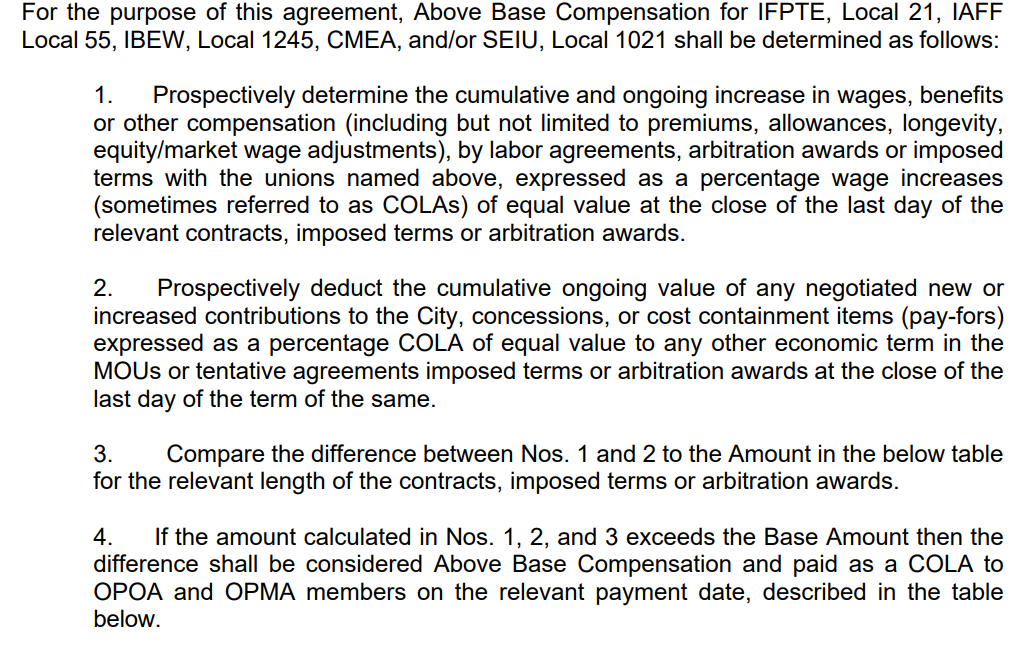
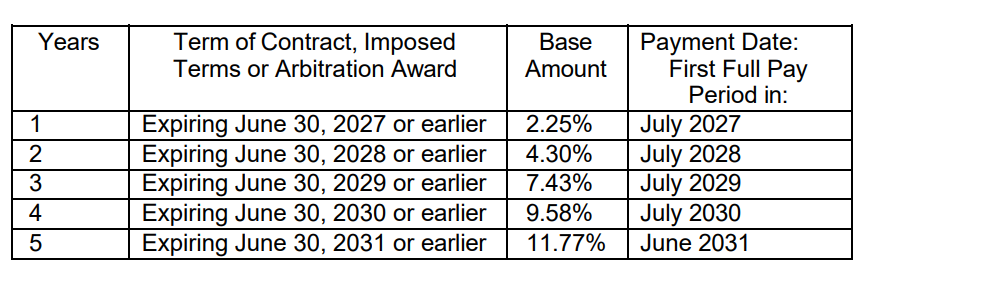
The agreements add another twist to the City’s 2026 labor negotiations after IAFF 55, the fire department bargaining unit, secured a 5 year agreement with raises [and payment of healthcare and pensions] earlier in the week. Alone among the bargaining entities, the Oakland Police Officers Association [OPOA] secured a “me too” clause in its agreement weeks ahead of every other unit, which would add any percentage increases from those contracts above the difference between OPOA’s pay increases and their increased benefits burden. The City has so far been silent about how the three latter agreements will affect OPOA’s contract, already predicted to cost a total additional $78 MM by the end of its 5 year term. A request for that determination went unanswered when IAFF won its contract, which secures a total of 16% COLA raises across the five years, compared to OPOA's roughly 14%. OO sent additional questions about the two other unions' contract impact on the OPOA contract this week and is awaiting information. The calculations for any potential dividend for OPOA are complex, but would require comparing the COLA increase of each individual union over the life of their contracts after accounting for both “pay for” and “longevity bonuses” over the period of each contract.
The timing of the resolution is noteworthy. Several weeks ago following pickets of her state of the union address, Lee vowed to bridge the divide in negotiations and secure fair contracts for city civilian workers. But notably, the agreements were finalized by Lee’s administration only after the unions authorized the power to strike. The agreements came days after IFPTE led a rally to confirm it would strike on November 5.
2) City Posts Three Fiscal Years of CAO Purchasing Actions in One Report
The Finance Department belatedly posted three years of City Administrator's Office [CAO] contracting authority reports on Tuesday to the Finance Committee. The report details purchases and contracts authorized by the CAO up to a maximum amount of $250K. Typically, in past years, the report has been presented to Council within months of the end of the previous fiscal year. In 2023, the last time such a report was brought to the body, the City presented the 22-23 fiscal year’s contracting authority report in September.
By mid-2025, the failure to present the next report for 23-24 became conspicuous. At the meeting, current Finance Director Bradley Johnson and staff presented several rationales for the delays. Ownership of the report had shifted from the Controller to a new Finance Department sub-agency and significant budget instability slowed down the report in 24-25—because the CAO cancelled many grants and contracts in a broad cost-cutting strategy. Johnson also noted that the current report is more robust than in the past, with grant agreements and cooperative agreements included. The latest, report 25-26 is presented within the normal time frame after the fiscal year’s end, however.
Johnson also cautioned that the report is not a detail of expenditures. Some contracts [or grant proposals] signed by the CAO under their authority go unspent for various reasons. Finance Chair Janani Ramachandran appeared to be caught off guard by this reality as she quizzed staff about an FM3 polling contract that had never produced a poll. Johnson noted that the contract for polling was executed to explore resident attitudes about bond measures, but the poll was never commissioned and the funds were never spent. The report is not a summary of expenditures and the amount of money actually spent on the contracts is not available in the report.
To further occlude the scope of the report, CAO sometimes requires Council authorization for contracts under its own spending authority which require a waiver of the City’s minority business rules, despite being included in the report.
Contracts and Procurement Administrator Laura Gonzalez Woodward also noted that some contractors which appear cumulatively for a larger than $250K set of expenditures are actually bidding and winning different City contracts in the range. The potential that the CAO was skirting Council authority by dividing up contracts annually for the same contractor and scope of work had been a concern of some Council members.
Spending on the CAO authority has actually decreased in the most current fiscal year, compared to the previous two years.
3) Cautious Optimism Among Stakeholders as CAO Returns With Disparity Report-Back
An oral report back on the City’s actions to resolve disparities in contracting received mild approval by some stakeholders, but the optimism was muted by concerns about the slowness of the effort after a significant delay in the release of the disparity report. Life Enrichment Committee Chair Carroll Fife had requested the report, but the City was not yet prepared for a written evaluation.
The City’s Department of Workplace and Employment Standards [DWES] and the City Administrator’s Office have been working with a coalition of Black-owned businesses, advocates and contractors on the implementation of their 21 recommendations for several months. Baker outlined 5 priorities that DWES has been working toward to diminish the disparities highlighted in the study: Oversight and Accountability, LSLBE Waiver Reform, Capacity Building, Prompt Payment, and Procurement Forecasting. Baker cited a lengthy list of work in each category, including significant changes in direction to administrative staff about waivers of LSLBE requirements, which were highlighted as a significant contribution to disparities, Contractor/Subcontractor matching, and staying ahead of upcoming contracting necessities to avoid last minute processes that require LSLBE waivers.
There were markedly fewer Black resident representatives present at the meeting than in other meetings associated with the issue, but those that did speak highlighted cautious optimism, gratitude for the belated focus but also concerns that the coalition may not have a strong enough voice in the process. Speakers also noted that the departure of Jestin Johnson under whom the process began, accentuated the sense of potential failures going forward. The previous director of DWES departed the city in September as well.
“We need to formalize a way for us to have a seat at the table that the city cannot renege on. And when I say that, I mean it in the sense of the city administrator Jestin Johnson resigning. We had to start all over again, and we appreciate the work that Administrator Assistant Administrator Chuck Baker has been doing. He's great, fantastic, but we cannot take chances with any mix-up or changes in leadership...and so the work is great, the progress is there…we really need to see results. We see progress, but we don't see results...” said Mario Wagner, the President of the Minority Contractors Association.
*IFPTE's agreement announcement came late in the day Friday, and the union appears to have not yet independently announced the win.
Comments ()