1) A Public Safety Drama in Two Acts [a,b]
a) Wang Pulls Scheduling Request for Report on Overtime Abuses, Suggests the OT-Curious Attend Finance Committee for a Regularly Scheduled Quarterly Report on OPD Overtime
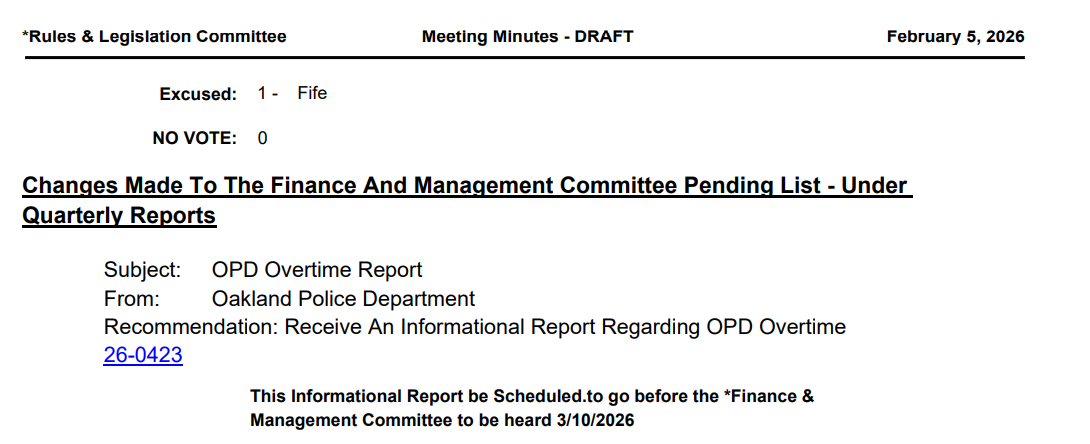
As Oaklandside’s reporting of alarmingly high overtime by an Oakland Police Officer's Association [OPOA] member in the OPD has echoed in the political sphere, Public Safety Chair Charlene Wang pulled her own OPD overtime report request before it could be scheduled at Rules several weeks ago on February 5.
The request for a report was initially agendized at the 2/5 Rules committee with a 2/14 hearing target at the Committee Wang chairs as a furor began to percolate about the Oaklandside article on Oakland Reddit boards and social media. The report would have been given at Council last Tuesday, 2/14, had it been agendized.
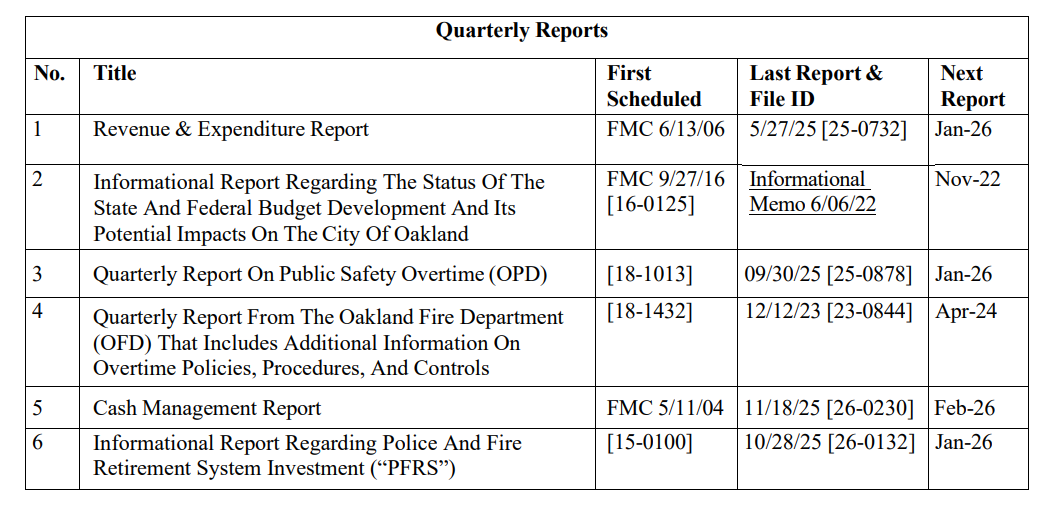
But at that 2/5 Rules meeting, Wangs’ staffer pulled the item and said Wang's office would wait for a report from the City Administrator which had not yet been requested for scheduling. Later in the meeting, the City Administrator asked to agendize the overtime report to the Finance Committee. The perpetually late and irregular CAO overtime report had been languishing on the Rules pending list, but was scheduled to a March 10th meeting. The regular quarterly report, though apparently presented haphazardly and annually at best for the past several years, is a far cry from the specific request on overtime practices originally made by Wang.
The high pay and generous overtime of a cadre of on-paper-millionaire police has long been a watermark of frustration for Oakland residents that spans an entire spectrum of public safety discourses. OPOA executive board member Timothy Dolan’s high pay of over $700K for several years has been well-known and posted annually at a popular website, and it's been a heated topic for some time. Along with the union’s President, Huy Nguyen, Dolan has been one of the City’s top salaried individuals for several years—Nguyen's pay, though more modest, is also more than half a million per year.
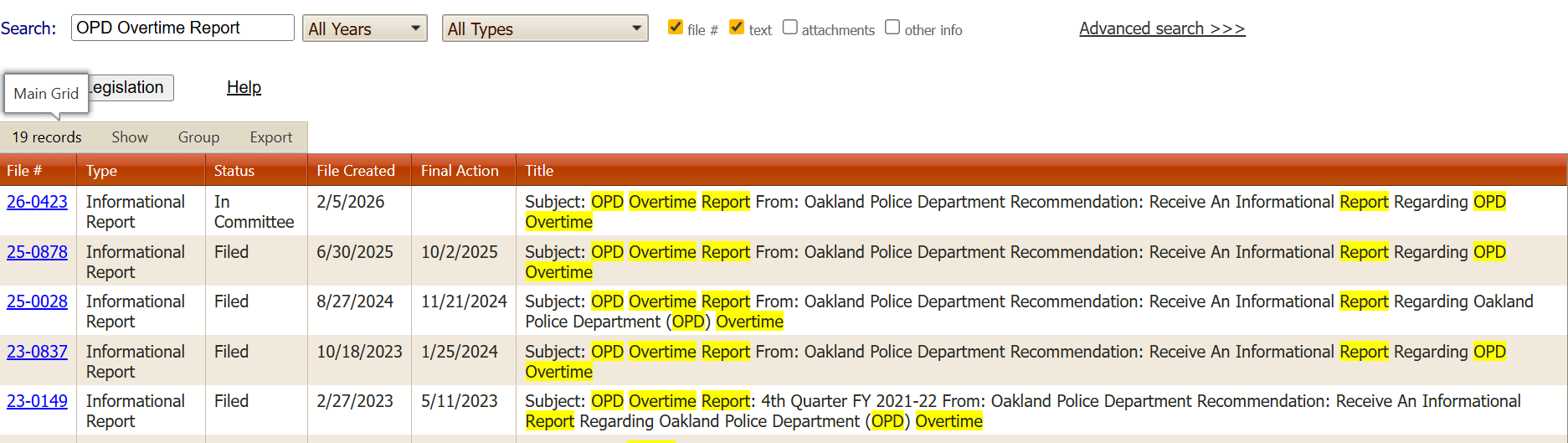
But the Oaklandside article dug deeper into public records, revealing that some of Dolan’s available overtime are generated from reviewing traffic reports and that a great deal of his overtime is not monitored at all.
At the 2/14 Public Safety meeting last Tuesday, Wang announced that this quarterly report from the CAO would be a response to the “troubling” overtime issue, eliding the fact that the overtime report is a regular report that has done little to inform change of the department's practices in the many years its been regularly heard at Council.
The Committee then went on to appoint Ken Houston to the inaugural Vice Chair role for the committee, who has often said publicly that he trusts OPD administrators implicitly. [see 1b, below]
Ironically, the only public commenter who spoke in favor of Houston, Paula Hawthorne, praised a predecessor Chair of the Committee for doggedly agendizing OPD’s practices, D6 CM Desley Brooks. Brooks became the target of a camouflaged mayoral campaign finance blitz by Libby Schaaf and was replaced by Loren M Taylor, who went on to create the Empower Oakland organization that heavily backed Wang.
b) Houston Appointed to Public Safety Vice Chair after Deleting Facebook Threat to Council Members Over EAP
CM Ken Houston had scheduled his own nomination to the Vice Chair of the Public Safety Committee at the 1/29 Rules Committee meeting. Houston pared down the flowery text from its original proclamatory-tone just before the Committee members approved his scheduling request, and the nomination was scheduled to the 2/10 Public Safety meeting. But before that Public Safety meeting could take place, other CMs apparently ran afoul of Houston, prompting him to undertake a series of regrettable social media posts that in another political environment may have cost him the role.
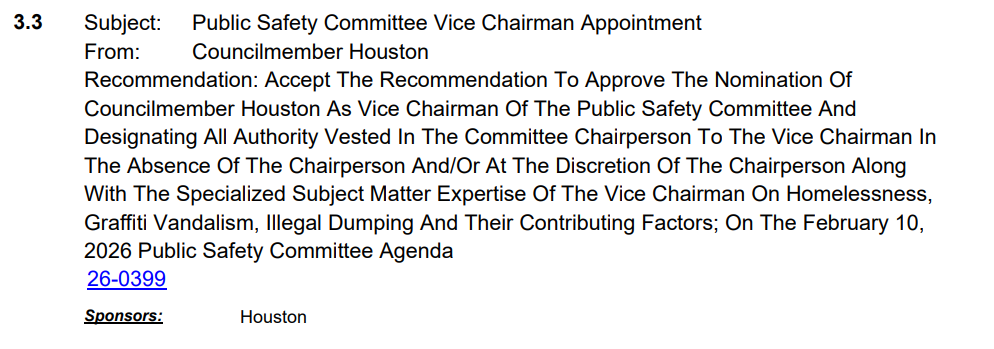
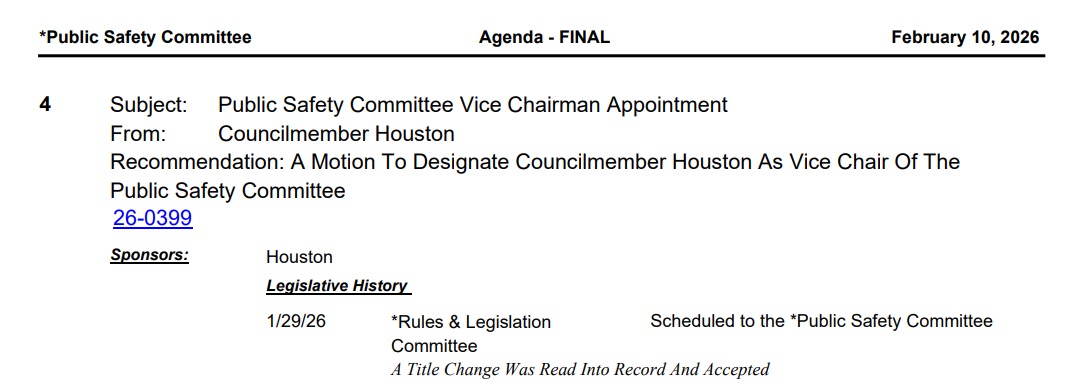
The issues appear to be linked to the Rules Committee declining to schedule his EAP directly to Council at their meeting on February 5. The Rules Committee members rebuffed Houston's latest, increasingly isolated, attempt to leapfrog the committee process with his largely unchanged EAP. Instead, Committee members suggested the EAP should go to the Life Enrichment Committee, the subject matter committee for homelessness policy.
That decision seems to have prompted Houston to post a tirade of Facebook messages that became increasingly angry, direct and threatening in the following days—culminating in the most explicit posted just hours before the meeting where fellow committee members would consider his self-nomination on Tuesday. Houston, referring to unidentified Council members who allegedly oppose his EAP, wrote that he would "eye for an eye F with" them.
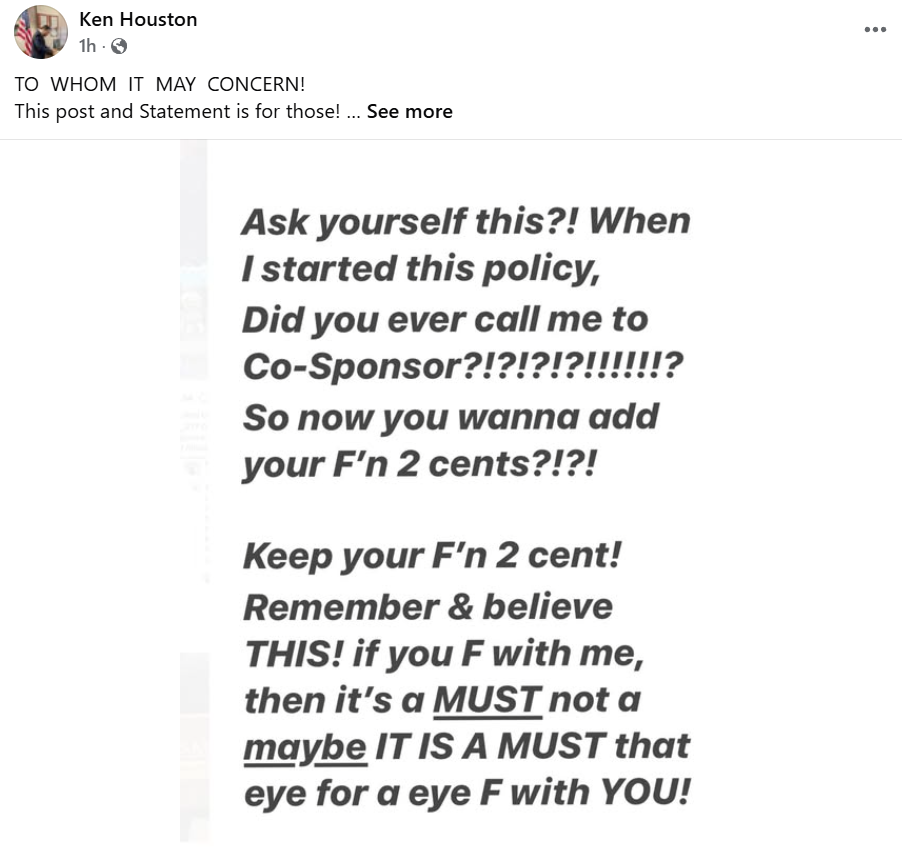
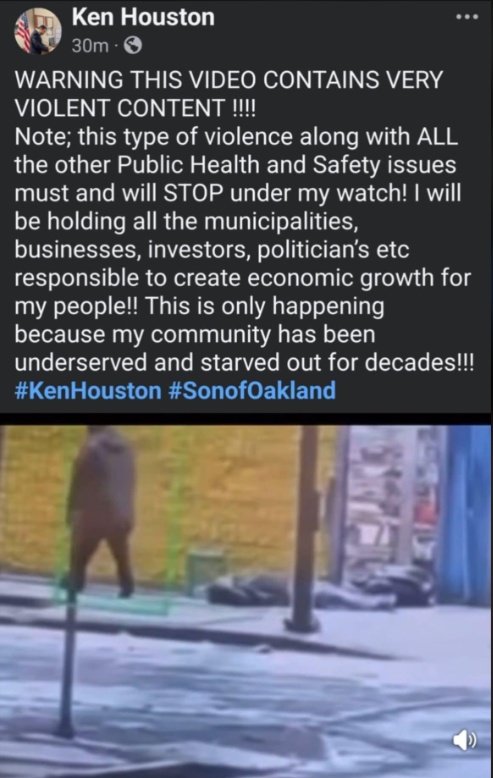
Houston ultimately deleted that post only a few hours before the public safety meeting—and another set of bellicose posts, including uncensored surveillance footage of a recent Oakland murder he blames on policies he says are supported by other politicians, were taken down a bit earlier.
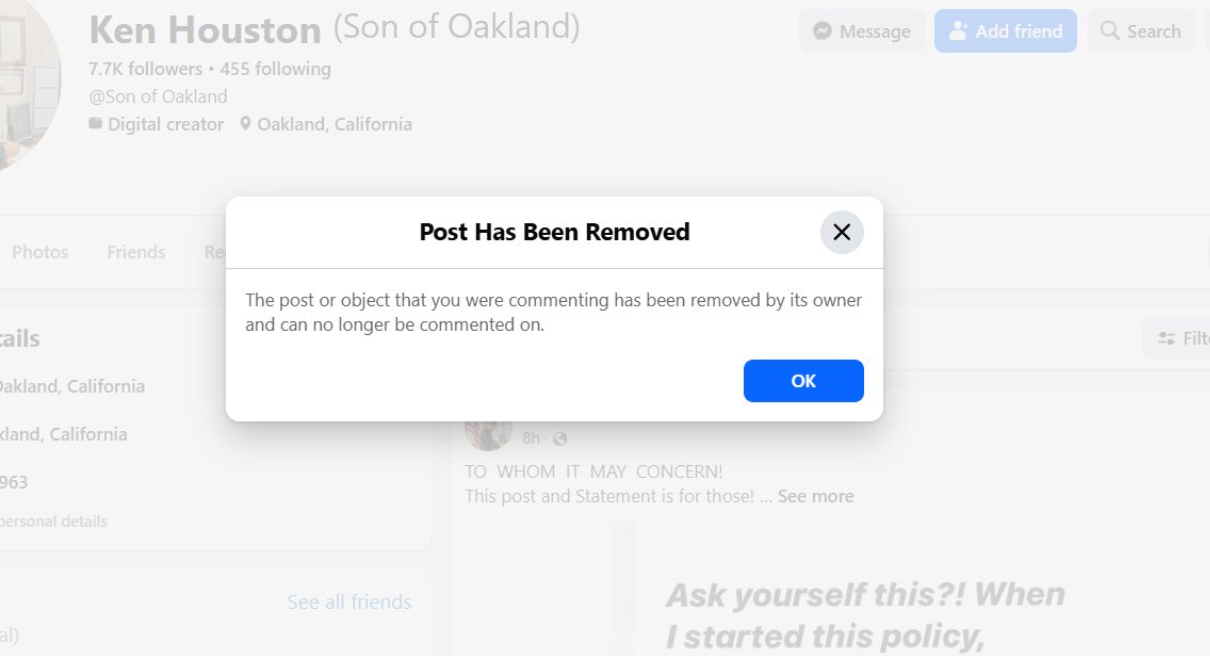
At the Life Enrichment Committee meeting that precedes the Public Safety Committee, that body’s chair, Carroll Fife, pulled the EAP from its then-scheduled 2/24 agenda. Fife framed the move both as an objection to not having been consulted* and that 2/24 meeting also being impacted. Houston acceded to the change with little commentary, an odd juxtaposition to his previous rants.
The posts never came up during the Public Safety Vice Chair nomination deliberation, either. Instead, Chair Wang asked Houston to make his “pitch” about why he should be the new inaugural Vice Chair. Houston kept it short, and suggested his “passion” to improve his community through better public safety was his over-riding goal.
The new Vice Chair role was made possible by changes to Council’s rules of procedure in December that garnered little public support, but ample opposition—both for the Council process and the new rules themselves. CM Carroll Fife voted against those rules and at the meeting of the Public Safety Committee, where she is a member, she said that the new Vice Chair role was one of several reasons. Fife argued that the Committees have never needed such a role because the Chair simply delegates a member to carry out the Chair’s duties when absent. No other Committee currently has a Vice Chair seat and there appears to be no other legislation in the works to create any.
In her acknowledgement that she had no specific problem with Houston's appointment if it was the will of the body, Fife cautioned Houston that being the Chair would require more than "passion"—but a knowledge of rules of procedure, the Brown Act and, as importantly, self-control.
"Chairing is more than a passion...it's about understanding the rules of procedure. It's understanding the Brown Act. It's being able to manage the public. It's being able to manage time and manage yourself, because a lot of times in these spaces, people will come specifically to antagonize, so it takes a lot of self-management...And just to state again for the record why I thought this particular change in the Rules of Procedure didn't make sense, because it's something, again, that the chair can already do without this formal procedure," Fife said.
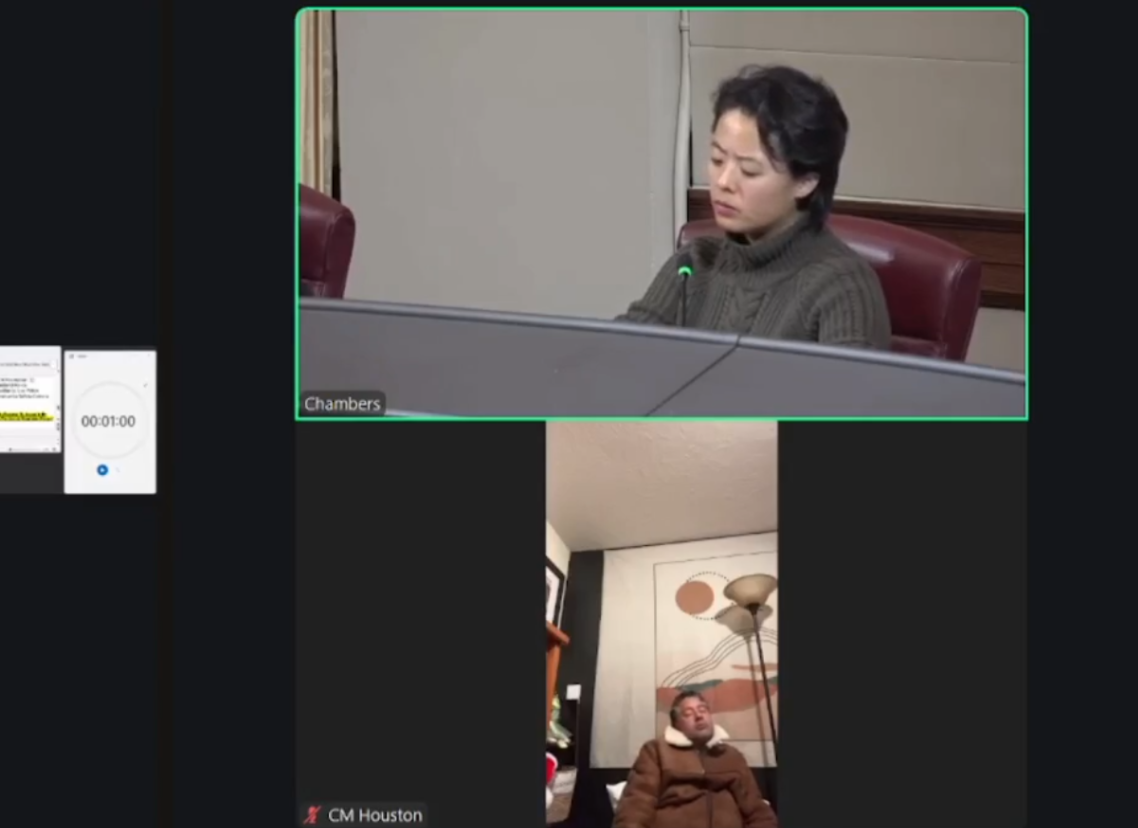
Wang also asked Houston to discontinue his practice of remotely attending the meeting if he were to be appointed to the new role. At a previous meeting to deliberate a potential contract with Flock, Houston zoomed from home. On that Zoom recording, Houston appears to be asleep, and at times is juxtaposed with Wang's screen while doing so.
The move to appoint a Public Safety Vice Chair continues Council’s odd relationship with the structure of co-leadership positions in the past year. The Council has a rules-bound role of Pro-Tempore President that is voted for every two years at full Council, but has not referred to it for months. After Council President Kevin Jenkins assumed the interim Mayoral position from January to April, Pro Tempore Gallo was put in charge of the Council as Interim President. When Council President Jenkins returned from his stint as Interim Mayor, after several months of Gallo’s Presidential stumbles, Gallo left the interim role, but has never presided over another Council meeting since. Despite having no delegated authority through the rules process of nomination and election, CM Ramachandran generally takes on the Pro Tempore role in Jenkins absence or when he steps away from the dais, through a currently untransparent process.
The actual value and intention of the committee-level Vice Chair role remains vague. But in an explanation to CM Rowena Brown, who asked what the role would mean outside of simply substitute-presiding over meetings, Wang appeared to claim that Houston would be able to use the title to gain "access" to other electeds and institutions outside of Oakland.
The Council’s rules designates the committee’s “exclusive jurisdiction” over the process, so Houston's appointment will not come for a vote at Council.
2) Police Chief Beere Tells Commissioners OPD Would Not Have Likely Intervened in Good and Pretti Homicides
During the Oakland Police Commission’s public hearing on the OPD’s role in Mayor Barbara Lee’s Executive Orders, Interim Police Chief Beere was asked directly by Alternate Commissioner Omar Farmer what the OPD would have done during the federal killings of Alex Pretti and Renee Good had officers been on the scene.
Beere responded that for the most part, the OPD would have not interfered with those actions, as they involved a weapon and a moving vehicle. Beere told the public and Commissioners that the OPD would only become involved in a clear life-threatening action by federal agents. But in his break down of what such a situation would look, Beere described an event that would have to be so detailed, obvious and slow that it would likely never happen—Beere mentioned the killing of George Floyd as as a potential situation where OPD officers would have intervened. But the police officers actions occurred over a ten minute period and was not visibly lethal force as defined by police.
On the other hand, Beere made it clear that OPD would not have protected protesters who sought to impede federal actions themselves and would likely have prevented protesters from doing so. Beere told the commission that OPD officers would only support legal first amendment protest, but would arrest protesters who interfere with federal actions or commit any nominally illegal acts to stop the abduction of Oakland residents or violence by ICE. Beere, like his predecessor Floyd Mitchell at a previous meeting, suggested residents contact the federal authorities to complain instead.
"We will protect everyone's first amendment rights to legally and lawfully protest, but we will not, will not condone any type of violence or vandalism, with regards to federal agents, if they're being perceived to violate their own policies or use of force. You know, we, we are encouraging people to file the proper complaints, as they would any other law enforcement agency with the Department of Homeland Security or the FBI," Beere said.
3) Key Expenditure Factor for Positive Budget Outcome Was Reining in OPD Spending Per Finance Department Director: "without that, this would not have been a possible number to balance"
In his 4th quarter FY 24-25 budget presentation to the Finance Committee last Tuesday, Finance Department Director Bradley Johnson alluded several times to the fact that limiting OPD spending through the "contingency" budget had been the key to bringing FY 24-25 on [and under] budget.
Despite missing the actual OPD reduction goal in the "contingency" budget, the attempt itself kept OPD's spending from its usual catastrophic outcomes. But its an open question if the same limits can be achieved outside the "contingency" budget emergency actions, which are no longer in place.
CM Zac Unger noted how critical overtime spending controls will be in keeping OPD on budget.
"We have 15 pages of data here, but really the entire ball game is that one number of the police over time, and so we need to make sure that we are ensuring that the police are able to do their jobs while also keeping that overtime number down," Unger said.
4) Logic of Parking Shift Questioned as City Administrator Appears to Back Down from Expedited Transfer of Parking Duties from OakDOT to Finance and OPD
A diverse group of opponents to the CAO’s proposed shift of parking enforcement duties out of OakDOT had their say during a report on the transition given to the Public Works and Transportation Committee last week. CMs Rowena Brown and Zac Unger had requested the report after the proposed shift became public—mostly due to the vocal concerns of its opponents aired during open forum at previous committees.
A parking enforcement manager says that the shift to Finance needs to be more critically examined pic.twitter.com/ZrhJs8GzUe
— The Oakland Observer (@Oak_Observer) January 15, 2026
The City had been poised to complete the shift in a non-legislative process before the report, but ultimately held off on doing so. The move now hangs in the balance, with no date certain for transition.
The CAO’s proposed shift, according to their own report, would transition enforcement and administration of the parking regime and its fines and collection to the Finance Department. Management of the Abandoned Auto detail would revert back to OPD. The parking department had once been embedded in the Finance department before it transitioned to the Public Works Department over a decade ago, and then was subsumed into OakDOT when that department was created. Since then, after a recommendation from the Reimagining Public Safety Taskforce, the Abandoned Auto Detail’s role was “civilianized” and shifted to OakDOT. The proposed shifts would bring the existing civilianized auto detail back under OPD; parking enforcement and many, but not all, of its OakDOT staff would move into the Finance Department. The shift would create two entirely new administrative roles at one of Oakland’s highest pay steps.
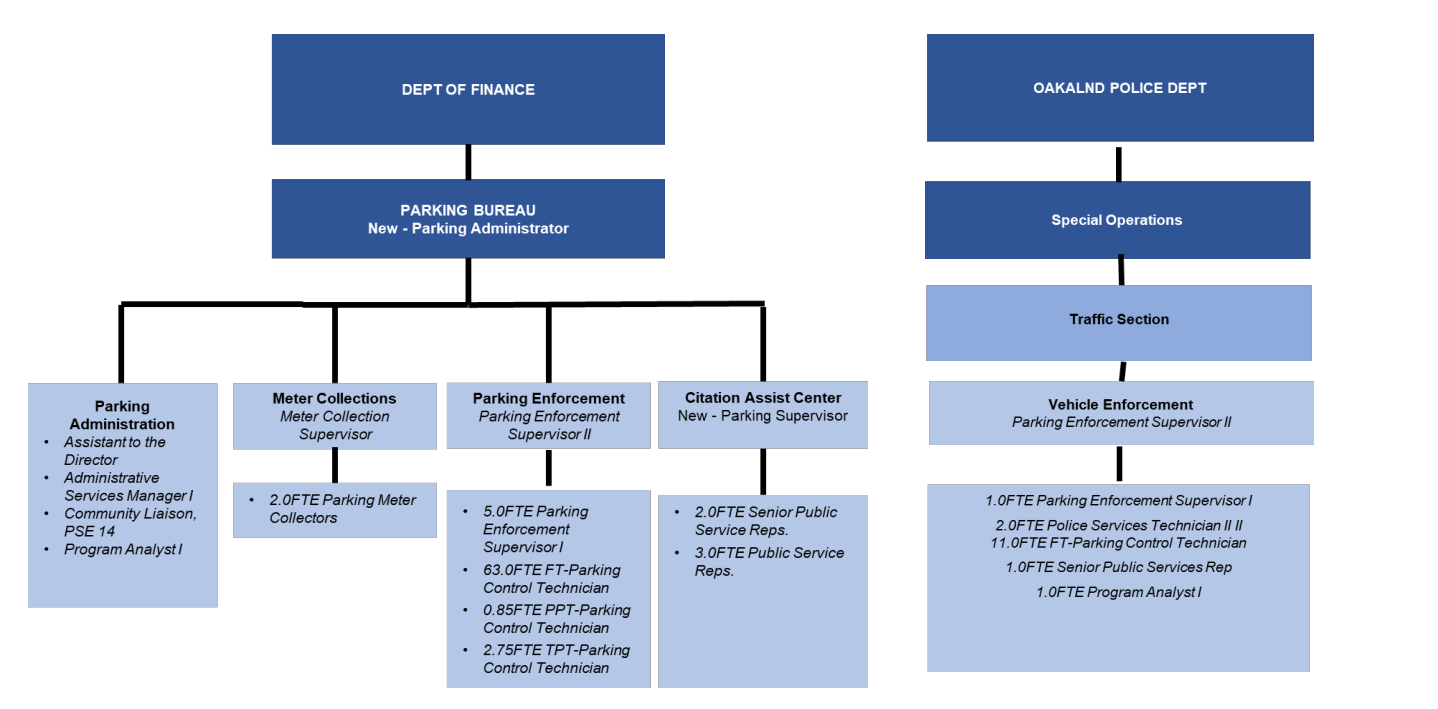
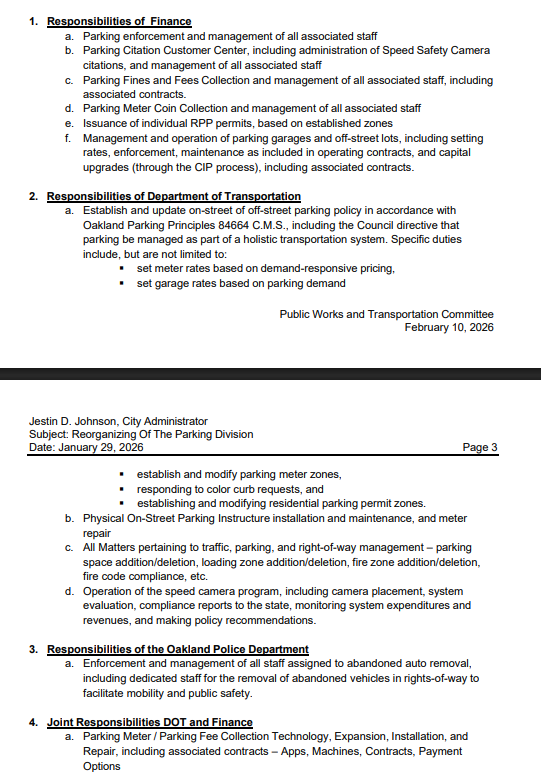
During the meeting, Finance, led by its director Bradley Johnson and the CAO, Jestin Johnson, made their argument for what they described as a logical move.
"And the city deserves an efficient collective process to ensure that we are able to rapidly collect on revenue...when it relates to revenue collections, time is money in a very specific way. Delays increase delinquency, and having very tight and clear collection practices is super important to ensuring that we're maximizing our revenue," Johnson said.
Johnson also explained the CAO's rationale for moving the Abandoned Auto function back into OPD, albeit with a continued civilianized core.
"Roughly 70% of operations related to abandoned auto or housed within the police department. The hope for realigning abandoned auto functions there is to ensure that there's a continued and built-in capacity for ensuring that our right of ways are clear of vehicles that are not operable, and that our neighborhoods are clean and secure, and OPD has the functions by which to do that."
But during the discussion, failings of the report were cited repeatedly both by opponents and CMs. During the discussion, for example, opponents argued that the report had mischaracterized the administrative change as substantively cost-neutral. But several IFPTE workers noted that it instead would totally over $1.4 MM. Current Parking Administrator Michael Ford confirmed he would retain his job at OakDOT on parking and mobility policy, while some of his current work would reside with a newly created administrator position in Finance.
The City Administrator and Finance Department also struggled to explain why the City Council had budgeted over $2 MM in additional parking investment in OakDOT in the last budgetary cycle, only to have this change in the works a little over six months later. Public Works Chair Unger pointedly directed the question to Finance and the CAO.
"OakDOT presented this plan at the last budget, and that was incorporated into our budget, and so did you have confidence in the plan six months ago? Why are we changing it now in the middle of the year, rather than [in a budgetary process]? Unger asked.
Johnson said there were concerns about the revenue portion of the OakDOT plan.
"[on the revenue piece] It's certainly not to say that there isn't confidence in what was presented six months ago. It's just a reality that, look, we're trying to move as aggressively as possible with the recognition of what's still outstanding," City Administrator Johnson said.
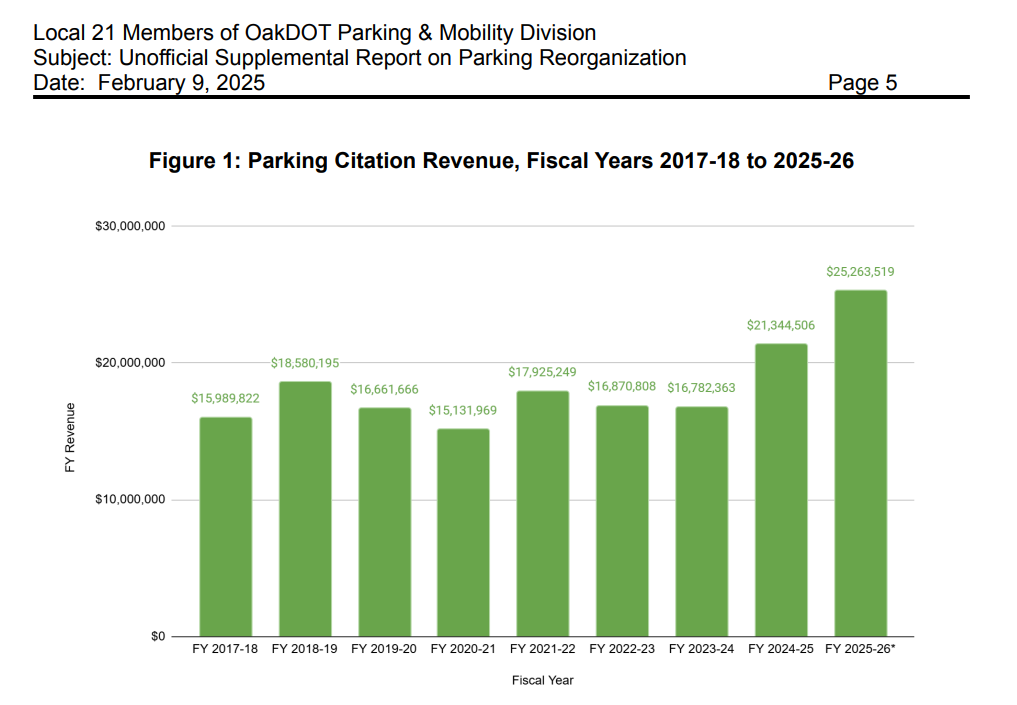
The opposition to the change has been considerable and organized given the lack of public disclosure about the changes. IFPTE Local 21, which represents OakDOT's parking division workers and managers, authored its own "supplemental report" largely rebutting the CAO claims. The report argues that despite the aby Johnson, revenue generation has increased since 2022 under OakDOT, with superior and more efficient revenue collection.
Opponents, who spanned bicycle and pedestrian advocates, OakDOT workers in the parking department, and business owners involved with several Business Improvement Districts decried the move during the public comment portion of the meeting. Several multi-decade employees gave impassioned defenses of OakDOT’s stewardship of parking enforcement, given added weight by their experience on the job through two transitions and on the eve of the third.
Probably the most compelling comment of the day from a 35 year parking enforcement veteran who has been through several transitions and says it's never been better than in the OakDOT pic.twitter.com/rGTnIJQOtx
— The Oakland Observer (@Oak_Observer) February 10, 2026
Parking's Ford pic.twitter.com/0eRGxsTN3d
— The Oakland Observer (@Oak_Observer) February 10, 2026
And OakDOT’s current parking and mobility director stunned the chambers when he suggested that he has consistently resisted attempts by public officials who’ve wanted to shut down a parking ticket for themselves or constituents. Ford told the body that as a protected employee he could turn them down without worrying about his job, a guarantee the at-will new director under Finance would not be able to count on.
"As your parking manager, I've spent the last ten years talking to people in power and telling them 'no, I can't do anything about your citation, I can't give you special privileges'...I'm able to do that with the confidence that nobody can kick me out and that I can consistently uphold the law and city policy," Ford said, casting doubt that an at-will employee could do likewise.
During the deliberation, Chair Unger said that he was not necessarily wedded to any particular model, but that it appeared that the CAO/Finance Department’s proposal needed work, and suggested it be reinvented as a hybrid model.
CM Charlene Wang criticized the report as under-done, and asked for supplemental information that would reflect sales tax increases or decreases throughout the periods.
"I've heard some compelling reasons as to why we might re org, but I don't see it in the report, and so I will be blunt, I found the report to be inadequate in terms of providing the rationale for doing the shift," Wang said.
For now, the change remains in limbo as the report will come before council on March 3.
Comments ()