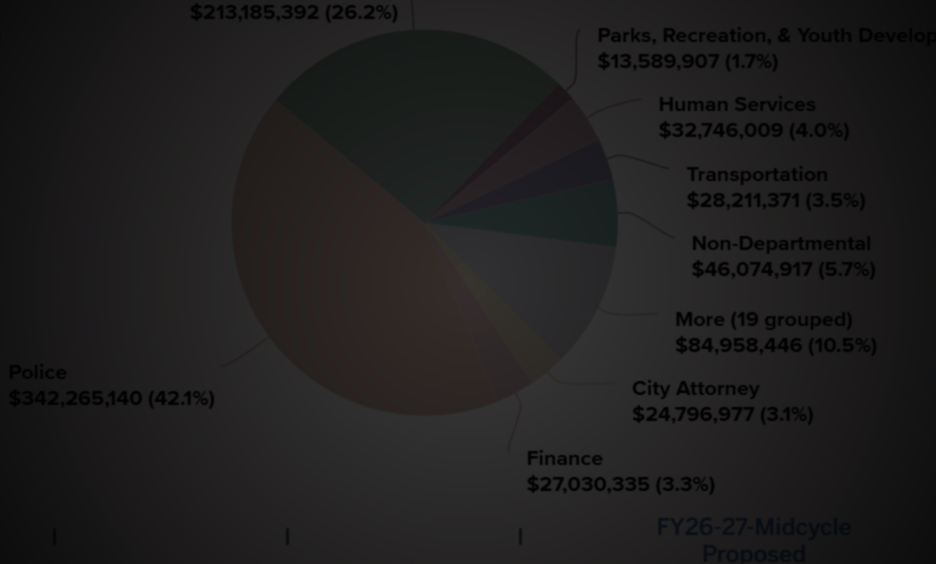
On Friday, City Council will have a special meeting to take a first look at the Council Budget Team's proposed amendments to the Mayor’s proposed budget amendments to the mid-cycle budget.
If you’re already confused, here’s how budgeting works in the city of Oakland:
—The City must, according to its own fiscal policy, pass a balanced budget for two fiscal years at the beginning of a budget cycle, not surprisingly called the biennial budget. Usually expressed as FY 25-27, for example. But the second year in that title is more of a rough draft than a final product.
—The Mayor returns to the second year, called mid-cycle budget, before June, the end of the fiscal year, to make adjustments to the second year budget based on changing assumptions, priorities and realities.
—The Council also makes amendments to the mid-cycle budget and, potentially, to the Mayor's changes. The council then deliberates and votes on either accepting, modifying or negating the amendments. It is an iterative process with both Council and Mayor changing things from the first draft of the budget they passed last June. That’s what’s happening now.
Council is having off-day budget meetings devoted to only the budget until the end of June. It's best to pass the budget by June 30, but if not, the budget outlined in the second year biennial is used until the amendments are passed.
This is a preview of Friday's 12pm budget meeting, where the changes will most likely solidify, and could even be passed.
The Mayor's Mid-Cycle Budget Amendments
The mid-cycle budget process is occurring in the shadow of the failure of Measure E, which would have financed additional services and costs–like an additional police academy, and a budgeted bump of funding for 22 officers the OPD has no current chance of recruiting. Lee’s budget amendment cuts funding to OFD and OPD relative to what was initially proposed in the second year of the biennial budget, mostly in overhead costs and infrastructure, like vehicles. But wages and overtime for OPD would remain relatively stable from one year to the next—OPD is likely to exceed its overtime in the current budget by about $15 MM. Many other departments are getting a slight increase, not a cut, and although there’s not been much discussion yet about why that is, it’s likely rising costs due to rapidly increasing inflation nation-wide. Given comments from IFPTE during a protest at City Hall this week, it does not represent cost of living wage increases in 2026. SEIU and IFPTE both received 2% COLA raises in March 2025 toward the end of that fiscal year, but did not receive a COLA adjustment in 25-26. It’s also not clear if OPD will continue to get relatively higher yearly COLA’s as they have for their near-decade-long MOU with the City. So far, such an increase does not appear to be factored into the budget.
Council Budget Changes
Council has relatively modest amendment proposals on top of Lee’s, with about $8 MM coming from the GPF. The City Council Budget Team this time around is composed of: Janani Ramachandran, Rowena Brown, Zac Unger, and Council President Kevin Jenkins. The changes come in two tranches: one shifts balances and more optimistic revenue projection from parking fees, among other things, from General Purpose Fund [1010] for about $8 MM; and the other is a series of reallocations from various special funds, for about $14 MM. Those are funds dedicated to specific purposes, and will go to funding specific actions and projects within that rubric.
A small part of the GPF shuffle, surprisingly, comes from reallocating monies from the CPRA and civilian Office of the Inspector General [OIG]. These are actually funding cuts to these police oversight departments. That's on top of the reality that Lee’s budget already cuts CPRA by around $700K and about 4 budgeted staff members. CPRA would further lose funding for a proposed project to oversee OPD Skelly hearings in the Council team amendments;the OIG would lose a communications officer to OPD.
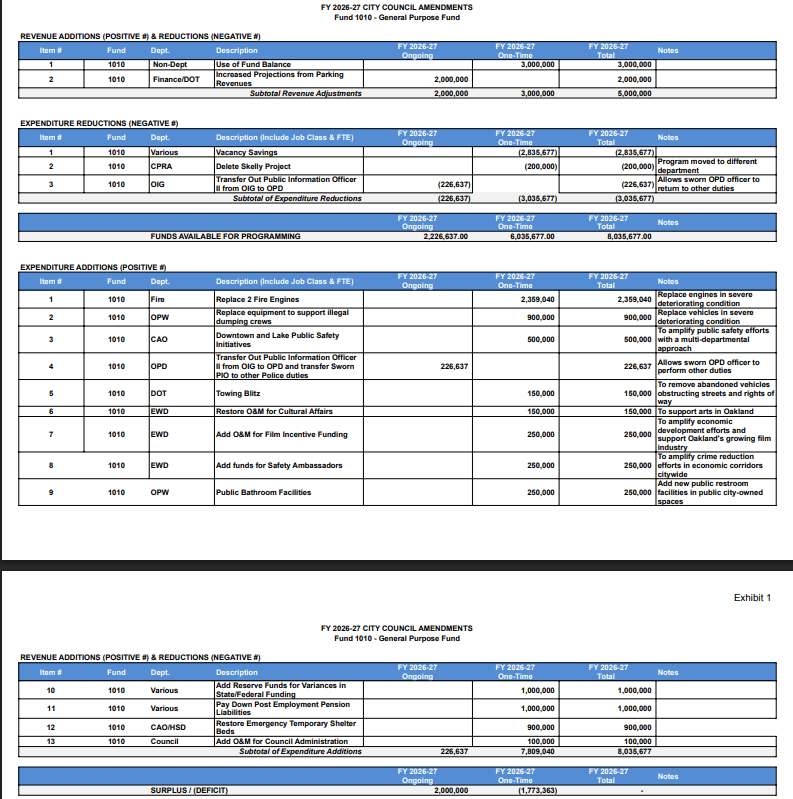
The bulk of the new GPF allocations would replace costs Measure E was meant to front:
—Replace 2 Fire Engines, about $2.3 MM
—Replace equipment to support illegal dumping crews, $900K
—Towing Blitz, $150K
The budget would also add new more murky costs, like so-called Downtown and Lake Public Safety Initiatives, about $500K. It's not clear what those measures entail, there is no description in the team's explanatory memo. The team has also included a lengthy list of direction to the City Administrator, as follows:
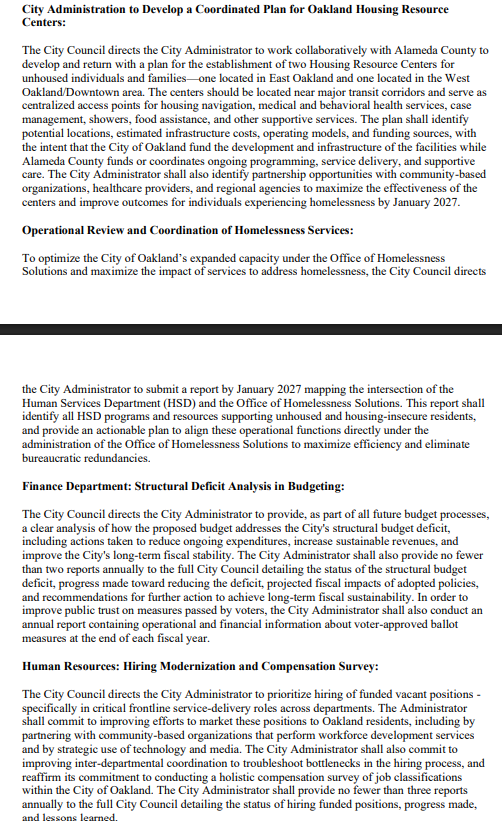
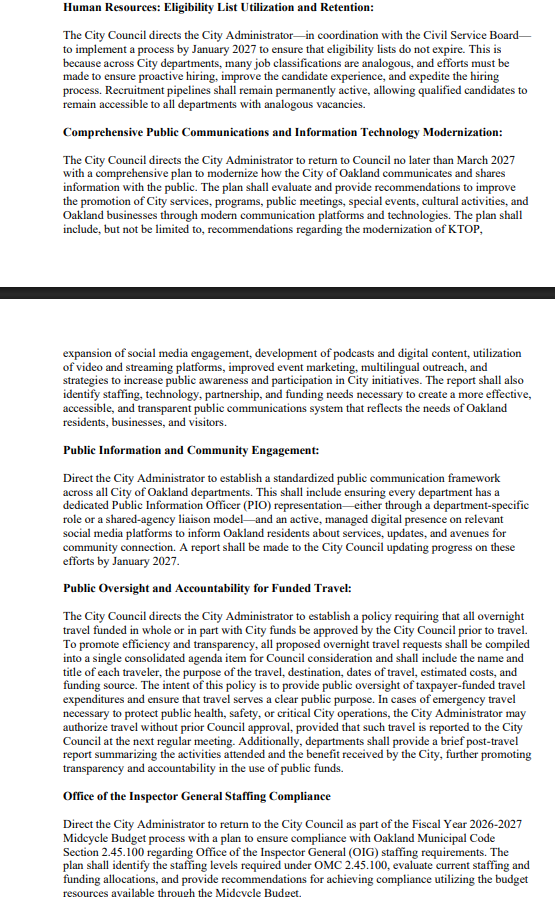
A significant directive, ironically, given the removal of an OIG staff member in their budget, is for the CAO to review the charter's OIG staffing requirements and budget the agency accordingly in the coming fiscal year.
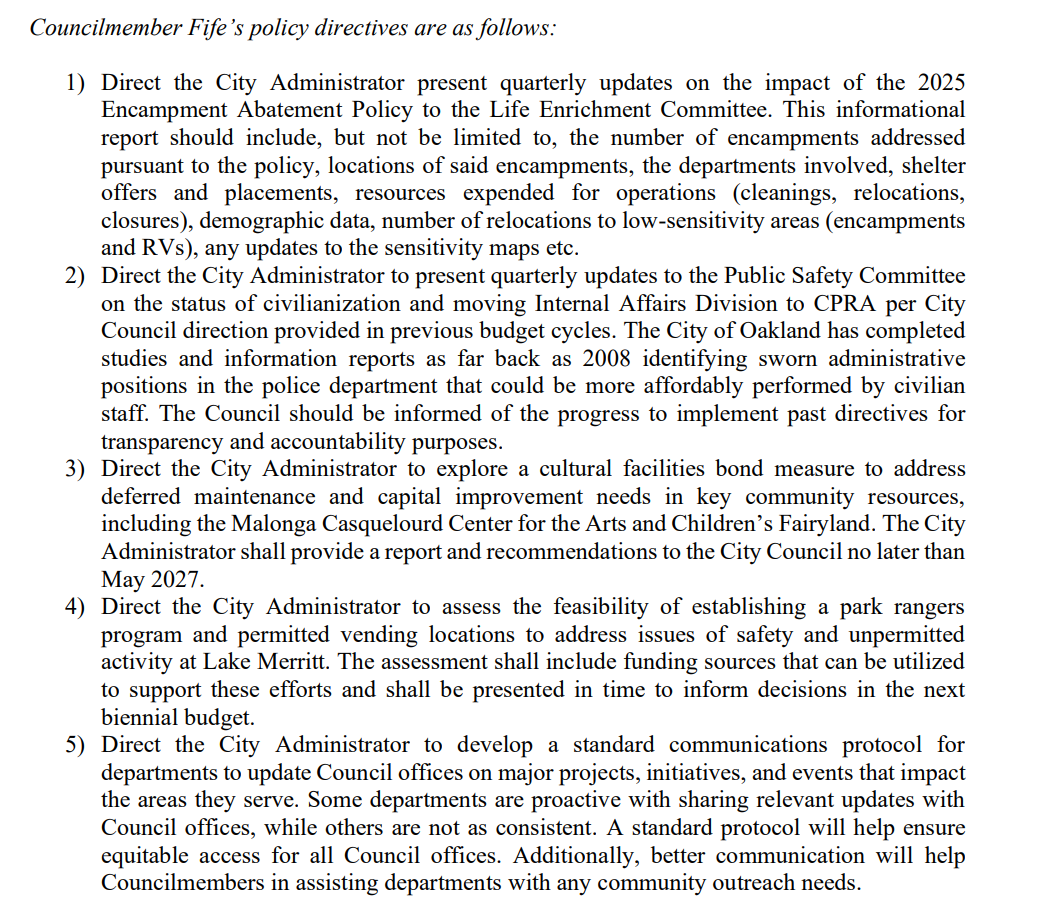
Other CMs also included budgetary documents, but among them, only CM Carroll Fife has provided a balanced expenditure and revenue input. Fife would add a Complaint Investigator back to the CPRA using vacancy savings from the CAO. Fife would also add an additional staffer to manage and facilitate the City's community gardens programs with funds from Measure Q. Fife would also add an allocation of Measure U funds of $50 MM for affordable housing. After two initial tranches, housing from U was not envisioned this year, but due to Fife's request, it's now included in the team’s budget amendments. Fife also has several budget directives.
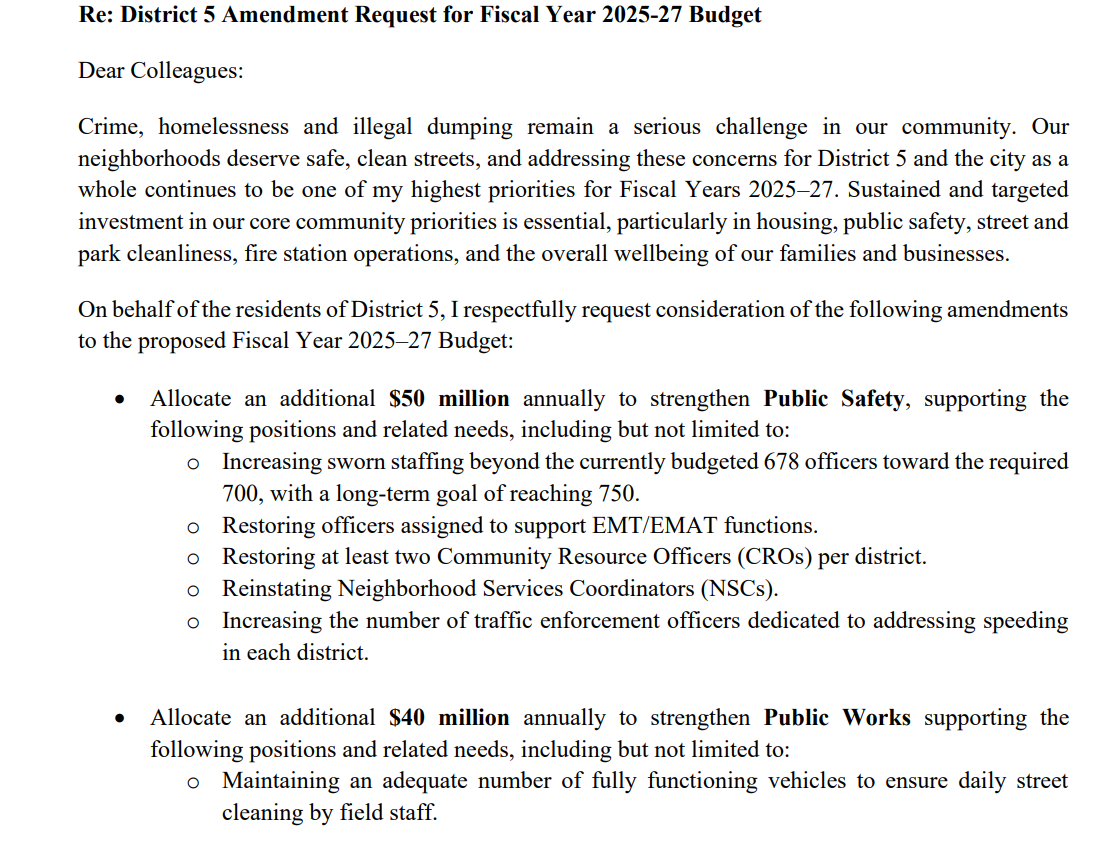
Noel Gallo has posted an inscrutable budget amendment request that contemplates adding 180 MM to the budget, including an allocation of $50 MM to OPD. Gallo proposed no sources for the $180 MM, and as he has been told in other budget discussions, his amendments can't be voted on.
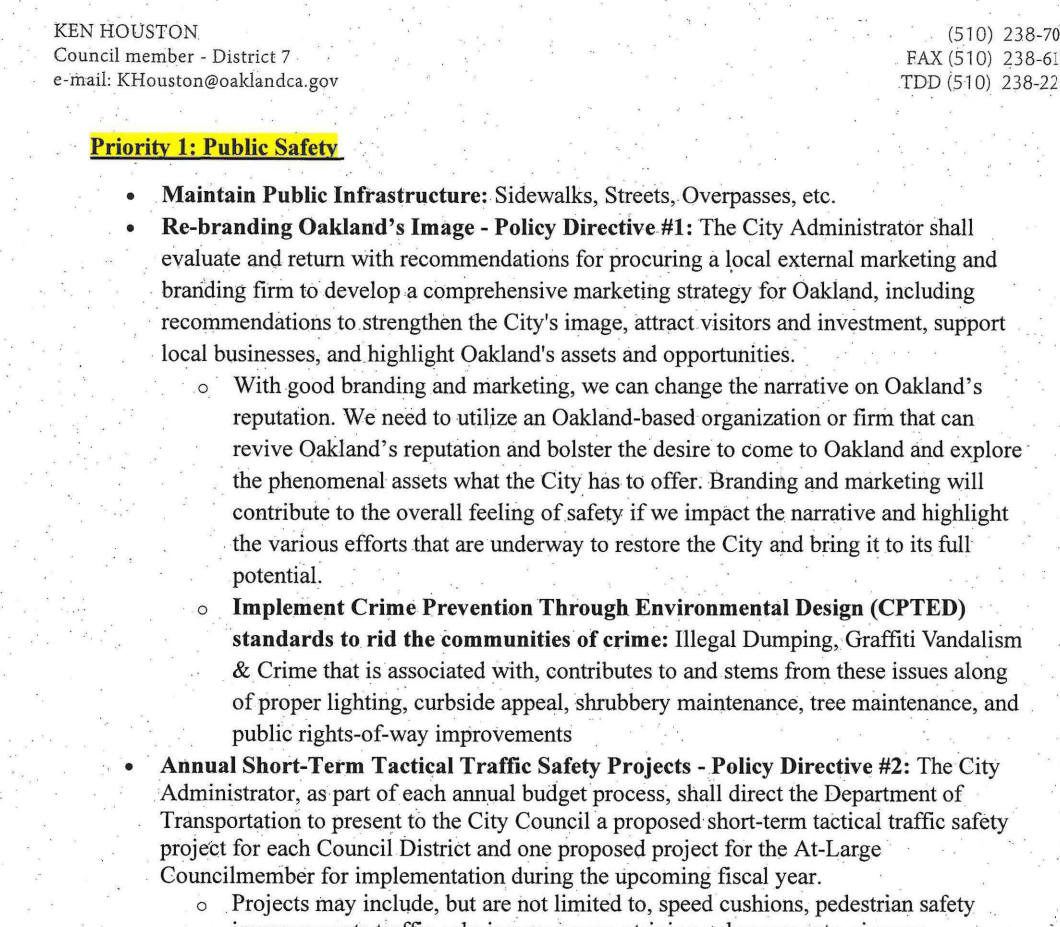
CM Houston added his own directives, which read like a first draft and may not be initially suitable to add into directives. The Council must still vote to both accept the Mayor’s amendments and the Council team’s amendments.
OO will be live reporting as usual on Friday.
Comments ()