Oakland’s City Council returns this week with a controversial, if brief, agenda. The big focus on Tuesday's agenda is, not surprisingly, Oakland’s biggest expense and headline generator, the Oakland Police Department.
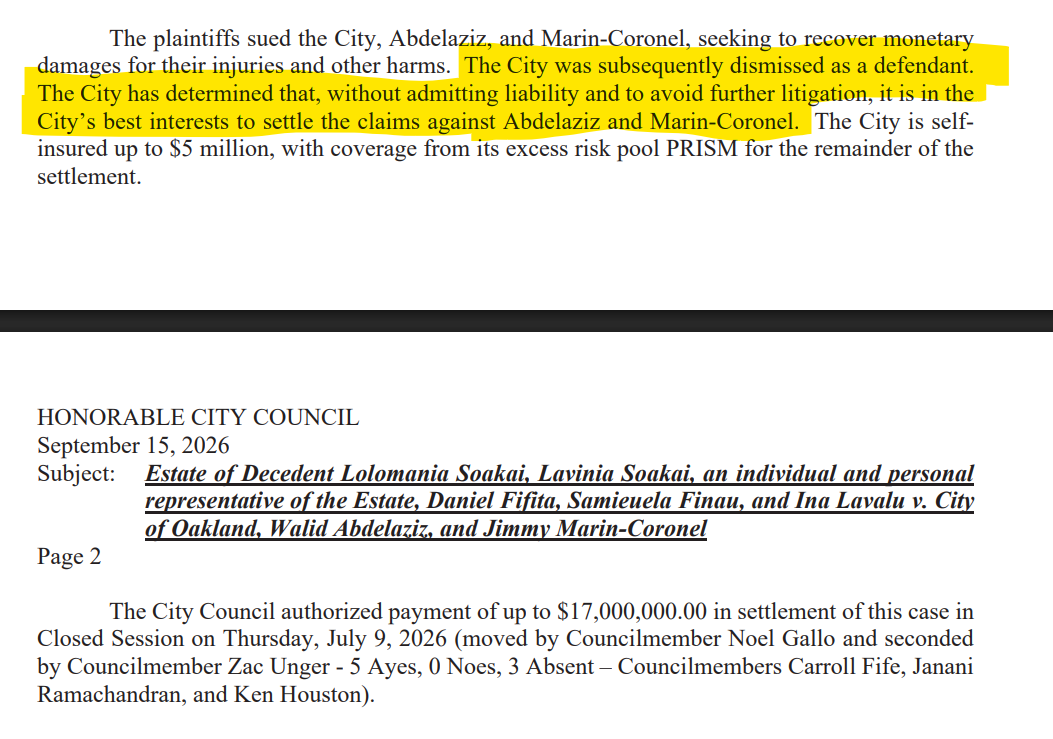
Now, at the same meeting on Tuesday, the City seeks to give OPD a questionable 5 year package of raises and bonuses, while also seeking approval of a settlement for the family of Lolomania Soakai, who was killed in the aftermath of an unsanctioned pursuit launched by two since-fired police officers. The $17 MM payout will be the highest the City has ever paid over a police action in the history of OPD.
In a related process, the Oakland Police Commission reappointment of Ricardo Garcia Acosta finally returns to Council, along with a new alternate commissioner appointment. You can see the full agenda here, OO has pulled out issues of general interest.
Despite Lower Front Facing Raises, the new Proposed OPOA MOU Has Hefty Bonuses for Senior Officers; Potential Additional Raises Could Be Added Months After Authorization
Oakland Observer published an analysis of the available information on the contract from the City's report and the MOU itself, here. The City finally got back to OO today with few answers. Asked why the City is rushing forward an agreement with OPOA that could change based on agreements it hasn't finalized with other unions yet, the CAO responds:
"The Administration met with each group separately to reach agreement, and were able to reach agreement with the OPOA first." The City still has no agreement with civilian unions—which could affect the ultimate raises for OPOA employees—and has no clear horizon for when it will reach one, per CAO spokesperson Sean Maher.
Police Commission Appointments Return: After Pulling Selection Panel Appointments Legislation, CAO Re-agendizes—This Time with Unprecedented Background Check Reports Attached
After pulling legislation at the last meeting before the end of the legislative session for the appointment of two Police Commissioners, the CAO has brought them back for the September 15 council meeting. This time, however, the legislative packet has an unprecedented copy of the background checks reports that the City used as part of its charter-mandated vetting process for the applicants. This would mark the first appointment process in the Police Commission, and perhaps any city commission, in which the physical documents are available in the agenda packet
The move marks just the latest novelties in the appointment process that began almost a year ago, when the City Council began to take on a more conflictual relationship with the OPC.
On the appointment list pulled in July was Ricardo Garcia Acosta, the current Chair of the body, who has been rejected by the body twice before, most recently earlier this year, when the Selection Panel, in an apparent show of indpeendnce, re-submitted Garcia-Acosta’s appointment. Council rejected the appointment a second time, with some arguing that the Selection Panel had not carried out a robust recruiting process and had produced too small a roster for consideration.
After the vote, the body’s liaison to the CAO was removed and replaced with a more recent CAO hire, with links to Council President Jenkins. Now, the Selection Panel had four vacancies to fill, however, with two upcoming term expirations on top of those two then being proposed for appointment. After several months, the SP collected about 50 applications—ironically, when divided by the necessary appointments, about the same number per position as the previous round found lacking by Council, had applied. Regardless, the body again chose Garcia Acosta, and Joey Harrison* as alternate and voted to submit the slate to Council several weeks ago.
During the deliberation, it was clear that the panelists did not consider the background checks, which must be performed according to a rigorous rubric, their role. But during that deliberation as well, the CAO’s liaison did not appear to comment on the process.
Sean Maher, responding for the CAO told this publication that the Selection Panel is required to review in open session, the background check outcomes according to the CAO and Oakland City Attorney’s reading of the charter. This reading would appear to be new, however.
After the item was pulled in July, the background checks were agendized at an August 20 Selection Panel meeting, for “review”, a basic acknowledgement that the background checks had been carried out. But its not clear if this is a task the SP knew was required, or if the process has been followed in the past–neither seem to have happened at any point in the processes since the Selection Panel began its work almost a decade ago. Maher said that once the CAO realized that the SP had not itself reviewed the background check, it pulled the item to conform with the charter.
The Selection Panel’s CAO liaison explained the process, but seems to have also either intentionally or unintentionally misled the Selection Panel about the process at council. [ ] told the SPs that the appointment packets contain the background checks—but a review of all of the packets for the entire period reveal that this is the first time that the background checks have been included in the packets.
City Appears to be Paying Settlement for Two Officers, Despite Being Dropped from Suit
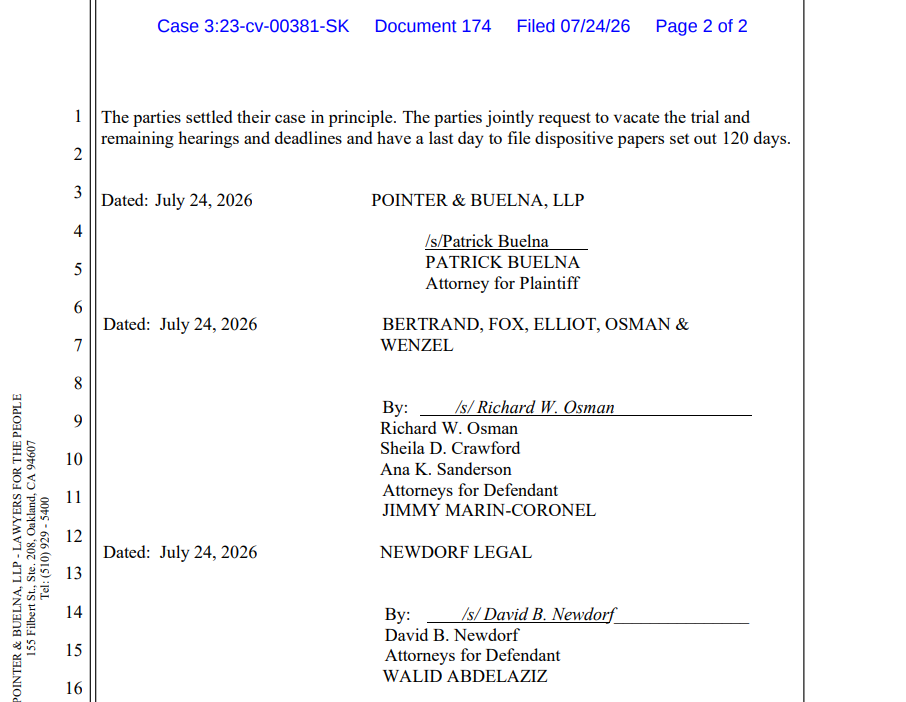
By all appearances and it’s own statement in the legislative report, the City is paying the settlement on behalf of the two officers whose actions led to the death of Lolomania Soakai, and the injury of his family members. Months ago, according to the court docket, the City successfully moved to be dismissed from the suit, and as the plaintiffs moved toward a jury trial, only the officers, Walid Abdelaziz and Jimmy Marin-Coronel, were named defendants. Higher courts did not uphold immunity for the defendants.
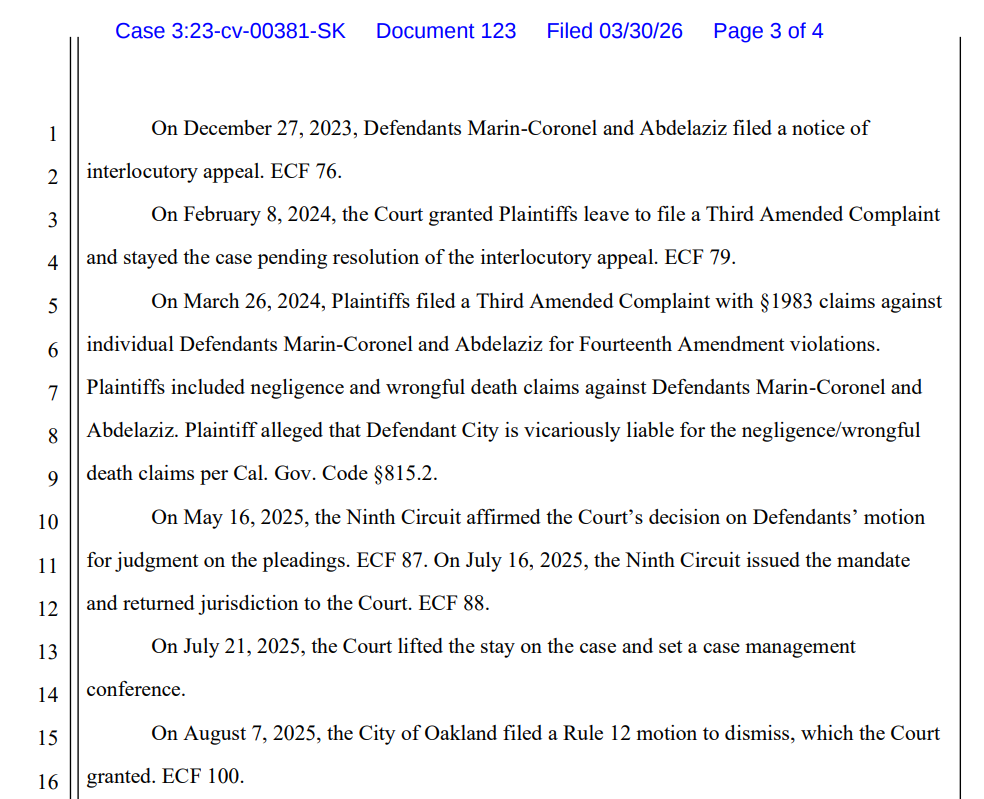
The court's notice of settlement shows only that the plaintiffs were included in the settlement agreement in a conference with those parties, not the City. The City claims it’s in the best interest of paying the settlement of Abdelaziz and Marin-Coronel, despite being left out of the current suit, suggesting that the city is still liable, though the actual legal basis for the payments isn't in the reports nor explained to the public. The legal basis for city assuming the settlement payment is not clear from any of the reports.
Comments ()